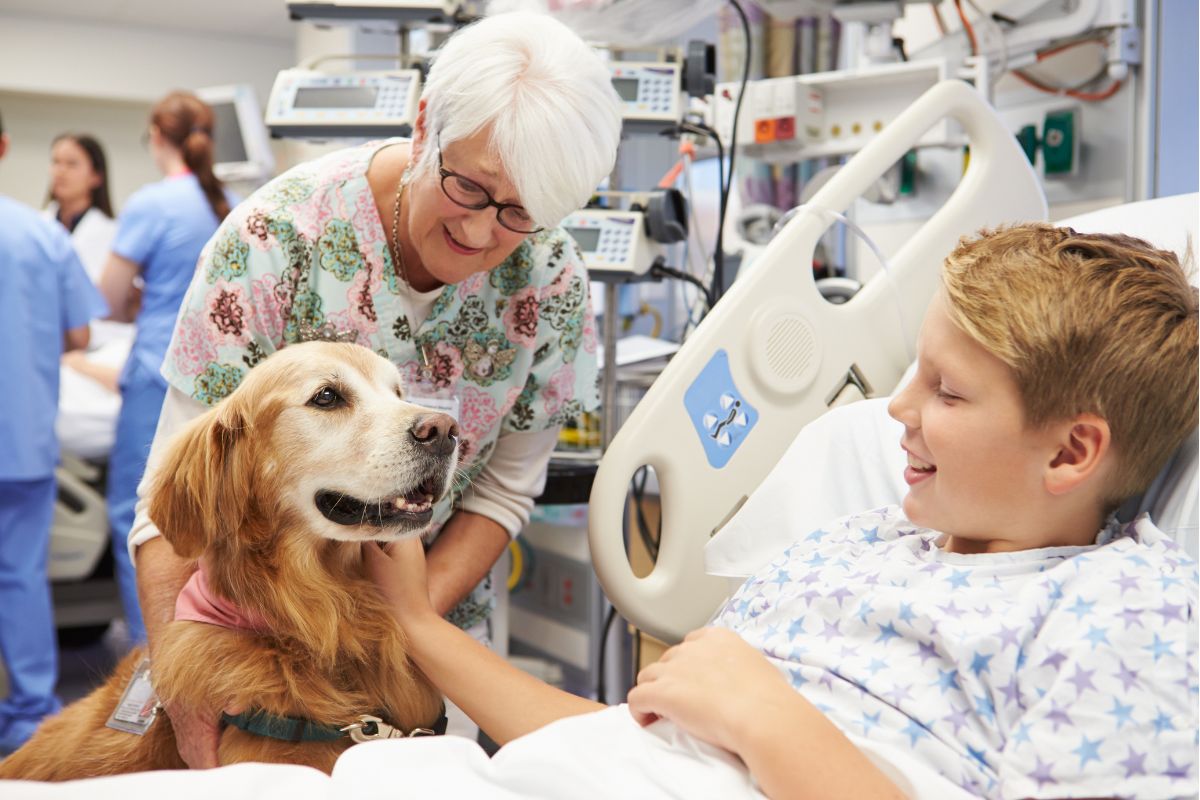
If you’re wondering if your dog could be a therapy dog working in the New Hampshire area, you’re probably someone with a big heart who thinks the dog you love could bring comfort to others. And you may be right! These FAQs will help you explore what therapy dog training and work is all about.
Therapy dogs play a powerful role in bringing comfort, calm, and connection to others, and for many people, training their own dog is the most meaningful (and practical) way to get there.
What is a therapy dog?
A therapy dog is trained for a specific type of work: providing comfort, emotional support, and companionship to people other than their handler.
Therapy dogs often visit hospitals, schools, nursing homes, libraries, counseling offices, and community programs.
It’s important to know that, unlike service dogs, therapy dogs do not have public access rights under the ADA. Instead, they work in approved settings where they are invited and welcomed.
What qualities does a good therapy dog have?
A variety of adaptable qualities are important for dogs doing therapy dog work. As much as you love your furry friend, not every dog is geared to therapy settings. At the minimum, they should meet these requirements:
- Calm and comfortable around strangers
- Friendly without being over-excited
- Able to recover quickly from surprises or distractions
- Comfortable being touched
- Reliable in new environments
What makes a good therapy dog handler?
Therapy work is a team effort, requiring reliability and a willingness to train consistently. While not an exhaustive list, many of the best therapy dog handlers are:
- People who enjoy volunteering and community involvement
- Educators, healthcare workers, counselors, and caregivers
- Retirees or individuals with flexible schedules
- Dog owners whose pets are friendly, calm, and enjoy meeting new people
Is certification required to be a therapy dog in New Hampshire?
While New Hampshire doesn’t require certification, most care settings that welcome therapy dogs require one to ensure that four-legged guests (and their handlers) are well-behaved and reliable.
Certification Requirements Include:
- Passing a background check of the handler
- Passing the Canine Good Citizen Test
- Passing the Therapy Dog Test
- Be up to date on all vaccinations
- Have a negative fecal heartworm test annually
- Be clean and well groomed when performing Therapy Dog duties
What would a typical therapy dog session look like?
Once your dog is trained, what does a therapy dog work session involve? There are many different types of programs that welcome therapy dog participation, but typically sessions will be around an hour long, and involve scenarios such as:
- Sitting quietly while a child reads to them
- Moving from room to room in a hospital or nursing home to greet people
- Allowing a guest to brush or pet them
- Laying next to a patient to offer comfort and warmth
As the handler, remember that you’re just as important as your dog! It’s vital that you:
- Be comfortable meeting new people–often in emotional circumstances
- Be comfortable sitting or standing quietly for 1-2 hours
- Recognize signs of fatigue or stress in your dog
- Be aware of interactions with your dog and step in if touching gets too rough (hugging, ear pulling, tail pulling, etc.)
What types of places can therapy dogs work in New Hampshire?
There are many places where therapy dogs are welcomed in, and of course local programs change often, but a few to look into include:
- Hug-A-Hound at Dartmouth-Hitchcock Medical Center in Lebanon
- Concord Hospital’s Pets Uplift People,
- plus many senior living facilities, schools, and libraries in towns and cities across New England, too.
Can I train my own therapy dog?
Yes! And many people do.
Owner-trained therapy dogs can be just as reliable and effective as dogs trained through outsourced programs when owners receive clear structure and professional guidance.
Training your own dog allows you to:
- Build skills gradually and responsibly
- Train in the environments where you’ll actually work
- Strengthen your bond and communication
- Move at a pace that works for both of you
Our sister business, College for Pets, provides a Therapy Dog program dedicated to personal attention that replaces guesswork with clarity, so you’re never wondering whether you’re doing it right or missing something important!
What types of skills can therapy dogs Be trained for?
Therapy dogs are trained for behavioral reliability, not executing specific tasks as service dogs are. Common focus areas include:
- Calm greetings and polite interactions
- Sitting quietly for extended periods
- Remaining focused around medical equipment, noise, or movement
- Responding reliably to cues despite distractions
- Handling unexpected touch with composure
Training emphasizes emotional steadiness, safety, and predictability. Because the purpose of Therapy Dogs is to provide joy and comfort it’s critical that people feel at ease around them.
Should I get an evaluation to find out whether my dog is a good candidate for therapy dog training?
Yes. Every therapy dog journey should start with a fit assessment, either in person or virtually. It’s not about whether you have a good dog, a loving dog, or if you’re a good owner. Not at all!
The goal is to consider the situations you and your dog are likely to encounter when working in a therapy dog setting, and look for key characteristics that indicate likelihood of success after skills training. In particular you should gain an understanding about:
- The dog’s temperament and behavior patterns
- The handler’s goals and expectations
- The partnership style between dog and owner
Not every dog is ready right away but if the foundation is solid and commitment is there, it may very well be worth working towards.
What if my dog isn’t ready yet?
That’s more common than you might think. Many dogs simply need:
- More maturity
- Better foundational skills
- Clearer communication
- Confidence-building experiences
Whether its College for Pets or another dog training professional performing the evaluation, part of their job is helping owners understand when to move forward and when to wait, without judgment or pressure.
What’s the first step?
The first step is a conversation with a Therapy Dog certification provider like College for Pets.
If you’re curious about therapy dog training, or wondering whether your dog could be a good candidate, we’d love to encourage you to explore this beneficial and rewarding work. Local experienced support willing to help is just a phone call away!